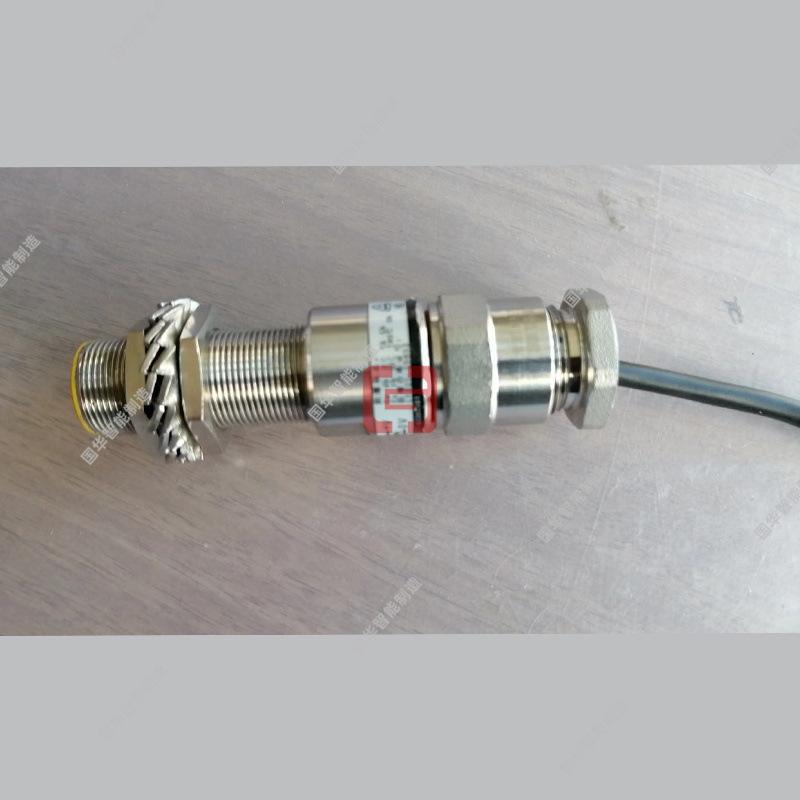
Produtos similares
Chave de Proximidade Capacitiva Reta de Fábrica Chave de Proximidade Magnética
Quantidade
Correspondências exatas por um preço menor


Produtos similares a um preço mais baixo
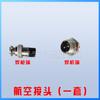
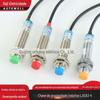



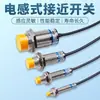





1. Intrinsically safe and intrinsically safe dust proximity switches:
1. Working Principle
Inductive: When the metal detection object approaches the detection surface of the intrinsically safe explosion-proof proximity switch, the proximity switch changes the current consumption. The difference between it and the commonly used standard proximity switch is that it has no trigger and output stage, and all processing is done by the relevant amplifier.
Large units and solid state systems perform.
Capacitive: When a non-metallic/metallic detection object approaches the detection surface of the safety switch, the proximity switch changes the current consumption.
It differs from commonly used standard proximity switches in that there is no trigger and output stage, and all processing is performed by the associated amplification unit and solid-state system.
Magnetic: The reed acts as a magnetic flux conductor. Before operation, the two reeds are not in contact; when the magnetic field generated by the permanent magnet or electromagnetic coil passes through, the external magnetic field causes the two reeds to generate magnetic flux near their end points.
When the magnetic force exceeds the elastic force of the reed, the two reeds will attract and conduct the circuit.;When the magnetic field weakens or disappears, the reed is released due to its own elasticity, and the contact surface will separate to open the circuit. The switchable reed is in contact with the normally closed piece when there is no magnetic field. When a magnetic field of sufficient strength is generated, the reed will move to the normally open piece, and both the normally open piece and the normally closed piece are fixed. These two fixed pieces and the swingable switchable reed are ferromagnetic pieces, but the surface of the normally closed dry reed contact is welded to the dry reed by non-magnetic metal. When placed under a magnetic field, the fixed pieces on both sides of the normally open and normally closed have the same polarity and the opposite polarity to the swingable reed. The non-magnetic metal at the normally closed end will isolate the magnetic flux. Therefore, when the magnetic force between the normally open end and the swingable reed is large enough, the swinging reed will contact the normally open piece and close.